

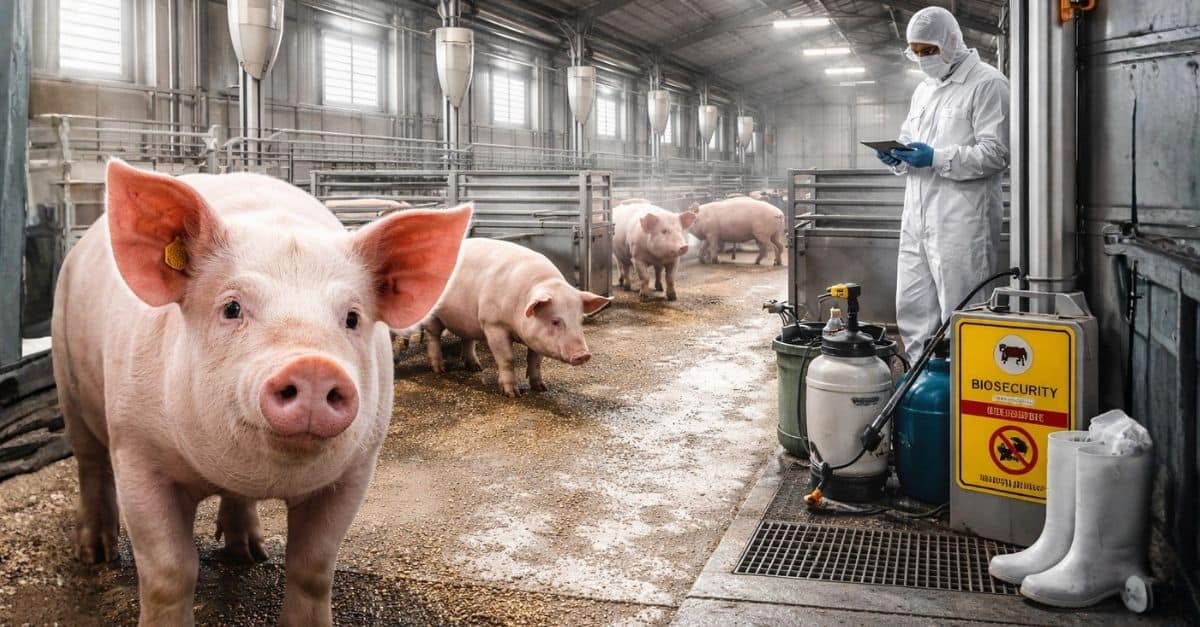
Argentina’s swine health sector is undergoing a major regulatory update with the implementation, on April 21, 2026, of the new National Plan for the Control and Eradication of Aujeszky’s Disease (AD). This regulation, established under Resolution 810/2025, replaces the previous framework defined by Resolution 474/2009. Its objective is to achieve the eradication of the virus within an estimated three-year period, aligning the country’s health status with the standards set by the World Organisation for Animal Health (WOAH).
Aujeszky’s Disease and Its Productive Impact
Also known as pseudorabies, Aujeszky’s disease is a viral infection that primarily affects domestic and wild swine. Its presence within herds leads to severe economic losses due to reproductive failures, high mortality in piglets, and delayed growth. Additionally, it imposes strict restrictions on the international trade of pork and breeding material.
Health Reclassification and Epidemiological Surveillance
Unlike the previous plan, the new regulation mandates compulsory health classification for all domestic pig farms used for livestock purposes, regardless of their production scale. Specific categories are defined based on serological and clinical status:
Disease-Free Farm: Mandatory status for genetic breeding farms and facilities with more than 100 breeding animals (sows and boars). It requires the absence of clinical signs and positive diagnoses for 12 months, along with serological testing every four months based on a representative sample, as outlined in Annex I.
Under Surveillance Farm: Applies to farms that have not certified disease-free status. These must conduct semiannual serological testing with 100% negative results as a condition to authorize any animal movement off-site.
Aujeszky-Protected Finishing Farm (IPPA): A new category for fattening operations, which must follow a mandatory systematic vaccination schedule within 14 days of animal entry. Animals from these farms may only be sent to slaughter or transferred to another IPPA facility.
Any establishment that fails to comply with this classification will be considered “unclassified” and will face total movement restrictions, including shipment to slaughter.
DIVA Strategy and Sanitation Protocols
In the event of a confirmed infection, the farm is immediately locked down, and all animal movement is suspended until the producer submits a sanitation plan to SENASA within a maximum of 30 calendar days.
The strategy is based on the DIVA principle (Differentiating Infected from Vaccinated Animals), using exclusively gE-negative vaccines. These vaccines enable differentiation—through specific diagnostic techniques targeting glycoprotein E—between naturally infected animals and vaccinated ones, facilitating the selective removal of positive reactors.
Chemical Biosecurity
SENASA identifies the main routes of virus entry as failures in biosecurity—particularly the entry of undisinfected vehicles and the shared use of equipment. As this is a complex viral disease, treatment is preventive, and biosecurity is the fundamental pillar to prevent its spread.
To meet disinfection requirements and reduce viral load, Fusión Pampa offers AGRIGERM 1510, a broad-spectrum concentrated disinfectant formulated with Glutaraldehyde (15%) and Quaternary Ammonium Compounds (10%). This solution has demonstrated virucidal activity against the Aujeszky virus at a 0.20% dilution.
Strict compliance with these protocols and the new regulations is essential to ensure the competitiveness of the swine industry and the continuity of commercial flows.
Fusión Pampa
“Animal Nutrition and Health”